Choosing Your Environment
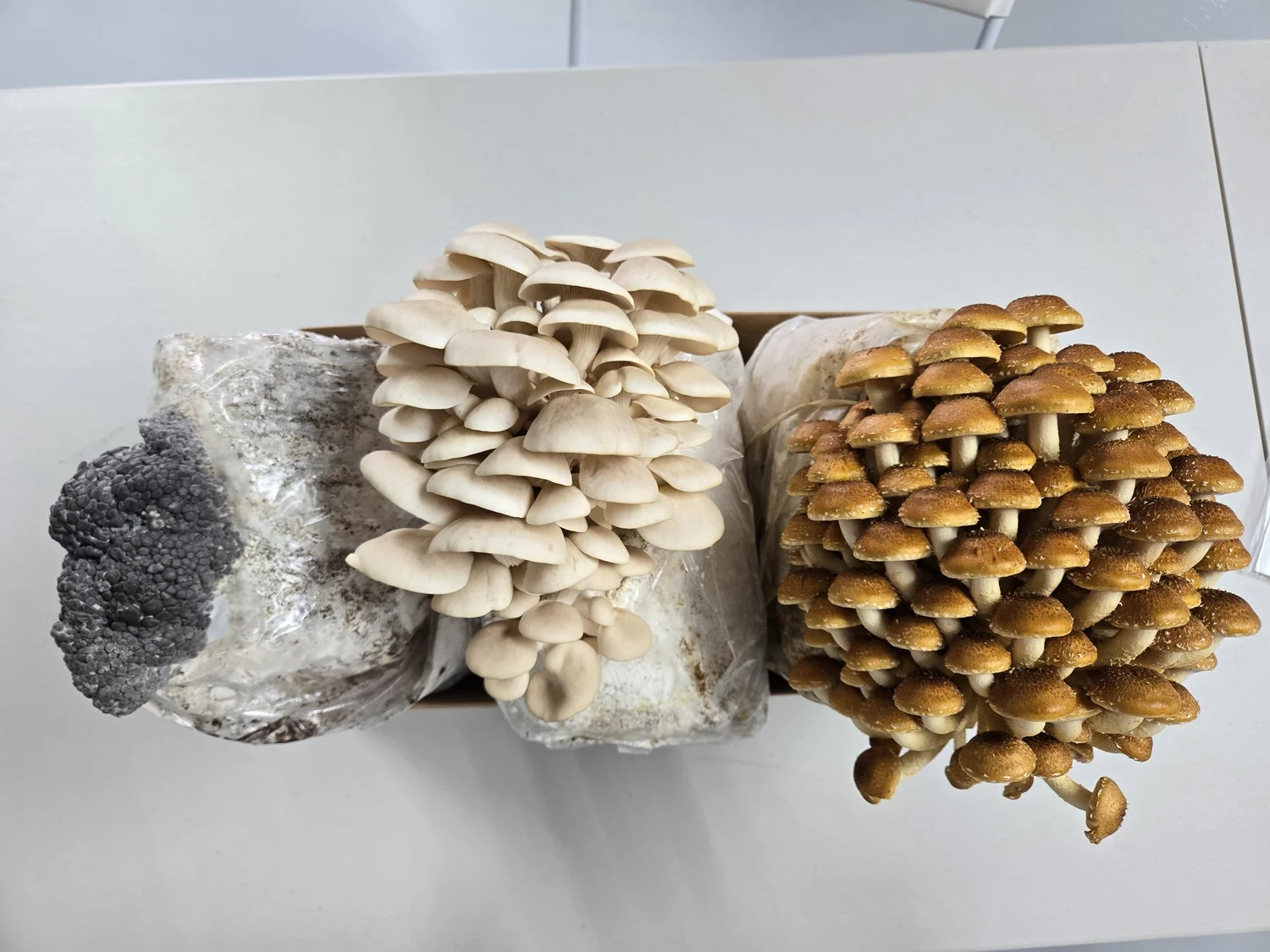
Choosing the Right Environment for Your Fruiting Chamber
Creating the right environment is the most critical step in successful mushroom cultivation. Choosing the right variety for your season during a rainy spell can make outdoor growing a breeze. For more control, fruiting chambers indoors allow growers to control light, temperature, humidity, and air exchange. Whether you're growing in a plastic tote, a Martha tent, or a full walk-in room, getting the environment right will make or break your yields.
Step 1: Choose Indoor or Outdoor Placement
Before you build anything, decide whether your fruiting chamber will be indoors or outdoors
. This depends on the
season
,
local climate
, and the
variety of mushroom
you're growing.
-
Outdoors
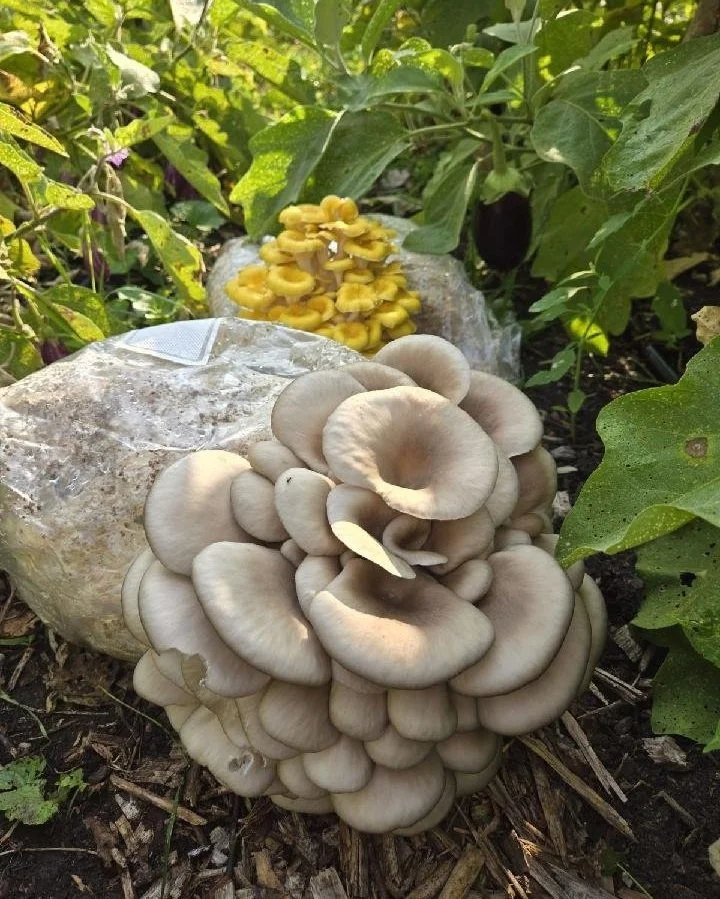
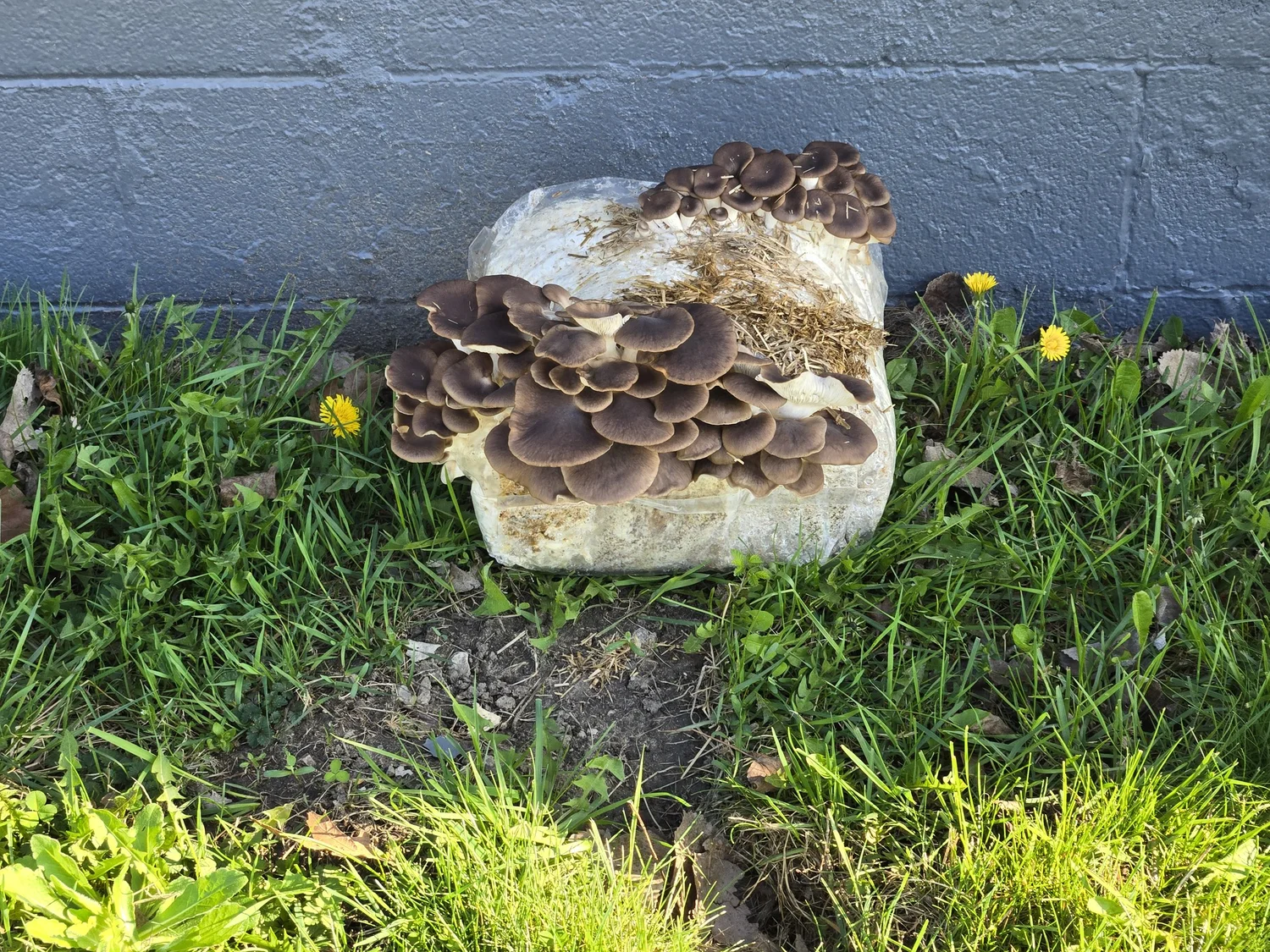
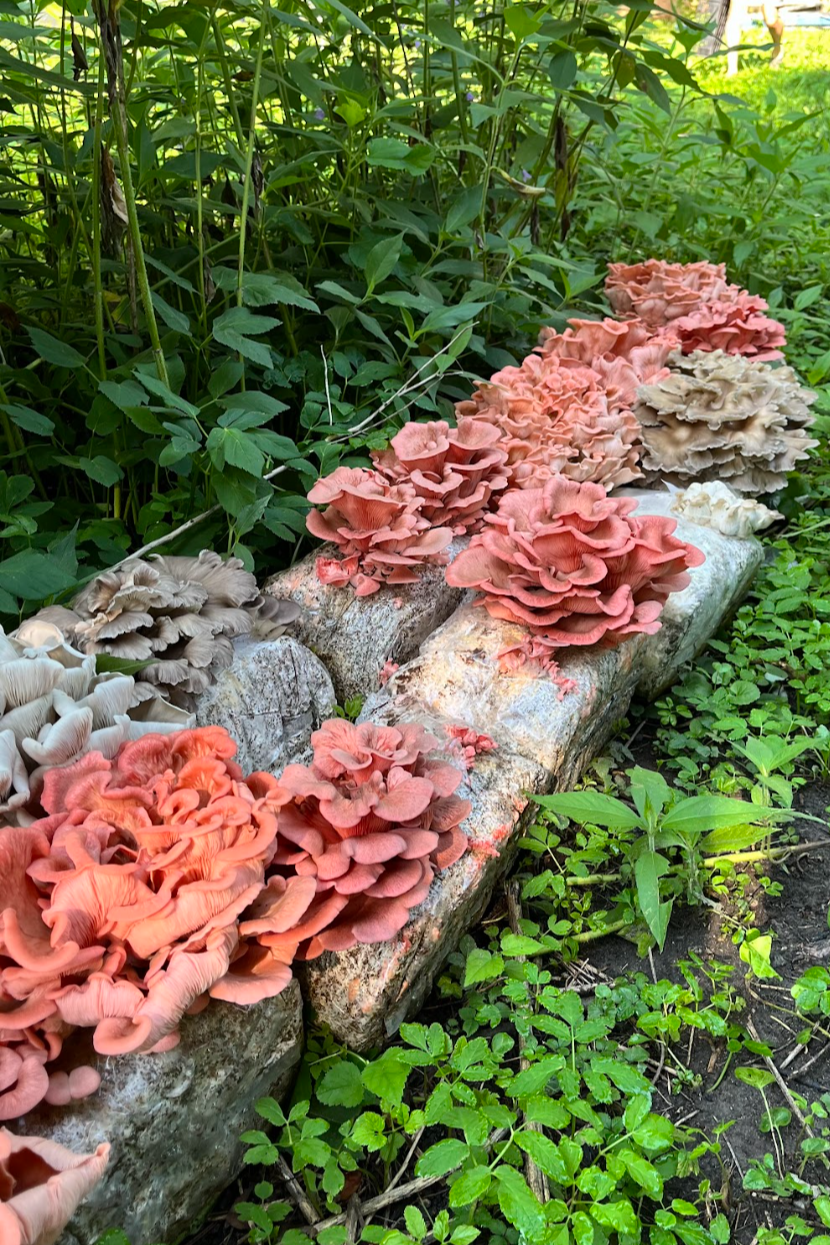
is possible in spring through fall in our midwest region, but you’ll need to find a shaded, humid location. Ideal outdoor spots include:
-
A shaded porch
or patio
-
The north side
of a garage or shed (which gets the least direct sun)
-
Under a dense, leafy shrub or trees
-
The key outdoors is shade and retained humidity
. Direct sun will overheat your mushroom block and dry it out, which is deadly to mushrooms.
Indoors Step 2: Pick the Right Fruiting Chamber Type
There are three common setups:
🔹 Shotgun Fruiting Chamber (SGFC)
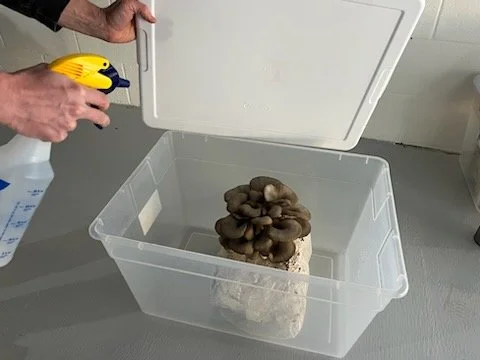
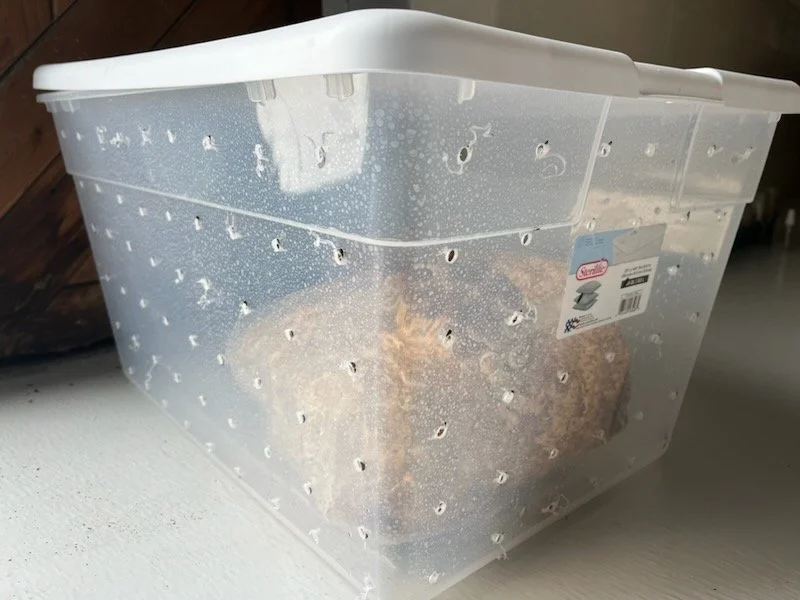
Best for beginners and indoor grows. Made from a clear plastic tote drilled with holes and filled with damp perlite.
Pros:
-
Cheap and easy
-
Great for kits or small batches
-
Allows high humidity and passive airflow
Key Features:
-
¼” holes drilled on all 6 sides, spaced ~2” apart
-
2–3" of wet (but not soaking)
coarse perlite on the bottom
-
Daily manual fanning and misting
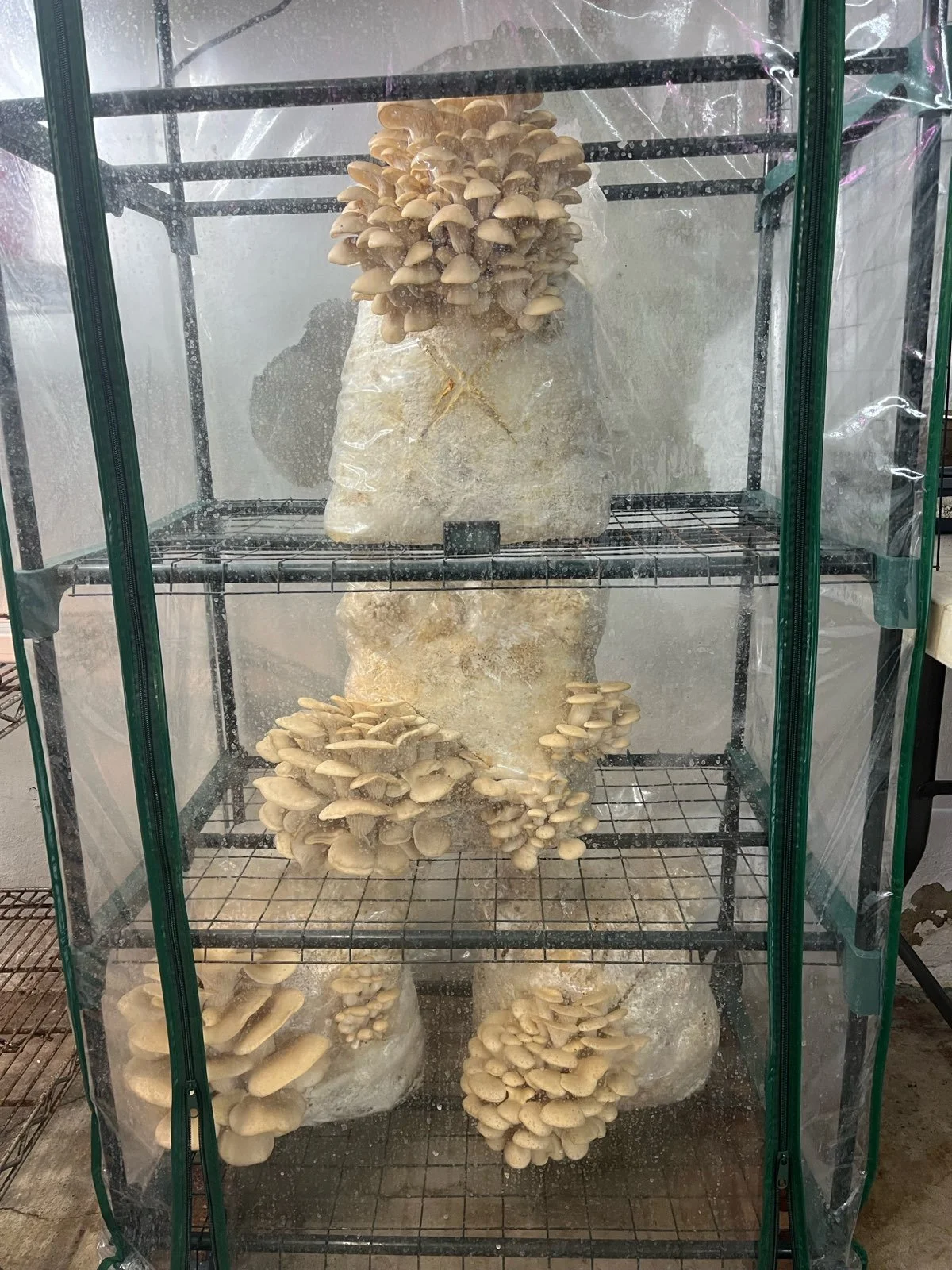
🔹 Martha Tent
Best for larger yields and semi-automated grows. A Martha tent is a metal rack wrapped in a zippered plastic greenhouse covering, with automated humidity and air exchange.
Pros:
-
Supports many fruiting blocks
-
Semi-automated with humidifier, fans, and sensors
-
Better environmental control
You’ll Need:
-
Greenhouse tent or zippered plastic wrap
-
Metal shelving rack
-
Ultrasonic humidifier or reptile fogger
-
Humidity sensor (set 75–90%)
-
Exhaust fan for CO₂ removal
⚠️ Keep all electrical components outside the tent to avoid short circuits.
Step 3: Control Light, Temperature, and Airflow
Your chamber environment must mimic the conditions mushrooms evolved to fruit in — moist, shaded forest floors or cool, damp caves.
☀️ Lighting
-
Use indirect sunlight
or a low-intensity LED light on a 12-hour cycle.
-
Avoid direct sun — it will overheat your chamber and dry it out.
-
Clear totes and tent walls allow for diffuse, natural lighting.
🌡️ Temperature
-
Aim for 55–75°F
, depending on variety:
-
Shiitake
prefers 55–65°F
-
Oyster & Lion’s Mane
do better around 65–70°F
💨 Airflow
-
Mushrooms exhale CO₂
and need
fresh air exchange.
-
In an SGFC, fan the air 2–3 times a day.
-
In a Martha tent, an exhaust fan automates this.
-
Avoid overly drafty spots that dry out blocks.
Harvesting Guidelines
Oyster varieties are ready to harvest when the cap edge’s start to uncurl.
Chestnuts are ready to harvest when the caps begin to flatten but are stil rounded.
Lion’s Mane is ready for harvest once the spines elongate to approximately 1/4 inches.
Gently twist your mushrooms from the base to harvest. All mushrooms should be washed and cooked before consumption.
Tips and Tricks
Avoid water pooling on the block surface.
Avoid placing your block in areas near direct heat or air conditioning.
Check out our “Varieties” page for variety specific information.
All mushrooms should be washed and cooked before consumption.
Check out this blog post for what you can do with your block after it’s done fruiting .
Visit our FAQ page for even more information.
-
-
-
-
-
-
-
-
Good things
are growing.
Tell us what you want to grow.
We’ll help you get it off the ground.